Most companies don’t fail at AI because of models. They fail because of data.
More specifically:
Continue readingThey try to run AI workloads on top of a data warehouse that was never designed for it.

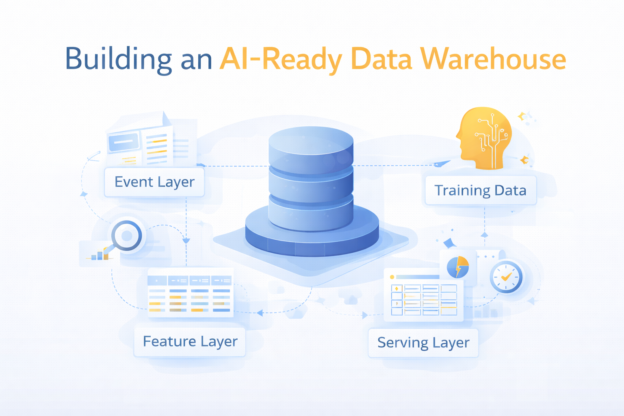
Most companies don’t fail at AI because of models. They fail because of data.
More specifically:
Continue readingThey try to run AI workloads on top of a data warehouse that was never designed for it.
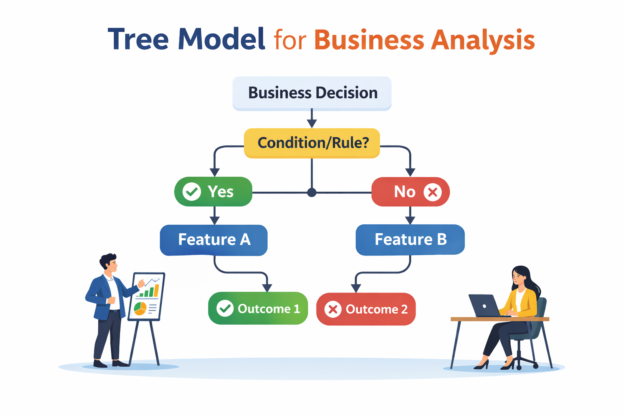
Tree models are among the most widely used machine learning methods in modern business systems.
From fraud detection and churn prediction to logistics risk scoring and pricing optimization, tree-based models power decisions across industries.
Continue reading
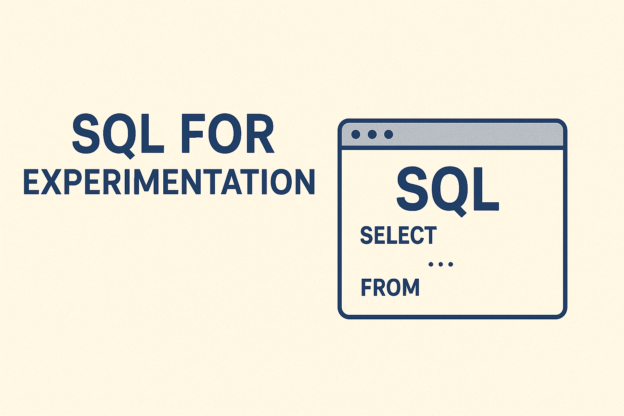
Most analysts start experiment analysis in SQL.
You write a query.
You compare treatment vs control.
You calculate lift.
You declare a winner.
For many well-designed A/B tests, that’s perfectly valid.
Continue reading
When people talk about feature engineering, SQL is often treated as a second-class citizen.
You’ll hear things like:
If you’ve ever run an A/B test, you’ve probably seen this happen:

If you work with data — in analytics, BI, or data engineering — you’ve probably heard the term dbt (pronounced “dee-bee-tee”). It has become one of the most popular tools in the modern data stack because it empowers analysts to build production-grade data pipelines using just SQL.
Continue reading
A/B testing (or split testing) is one of the most powerful tools in an analyst’s toolbox: it allows you to compare two (or more) versions of a web page, feature, or user experience — and determine which version truly performs better.
Continue reading
When building data-driven solutions — whether dashboards, reports, or analytical pipelines — you often focus on selecting, transforming, or visualizing data. But to make all that work, you need a well-structured database behind the scenes. That’s where Data Definition Language (DDL) comes in.
Continue reading
JSON (JavaScript Object Notation) has become the universal language for exchanging data between applications. Whether you’re pulling data from APIs, storing logs, or dealing with semi-structured data in a data lake — JSON is everywhere.
Continue reading
If you’ve worked with SQL for data analysis, you’ve probably used the SELECT DISTINCT keyword to remove duplicate rows. But at some point, you might come across another term — SELECT UNIQUE.